Trump Reveals US Special‑Forces Rescue Operation Caught in Potential Iranian Trap
Donald Trump recounts a high‑risk mission to extract an injured F‑15 crew member from Iranian mountains, describing suspicions of an Iranian ambush, the involvement of roughly two hundred special‑operations troops, and limited intelligence assistance from Israel.
US Forces Suspected an Iranian Lure During the Extraction
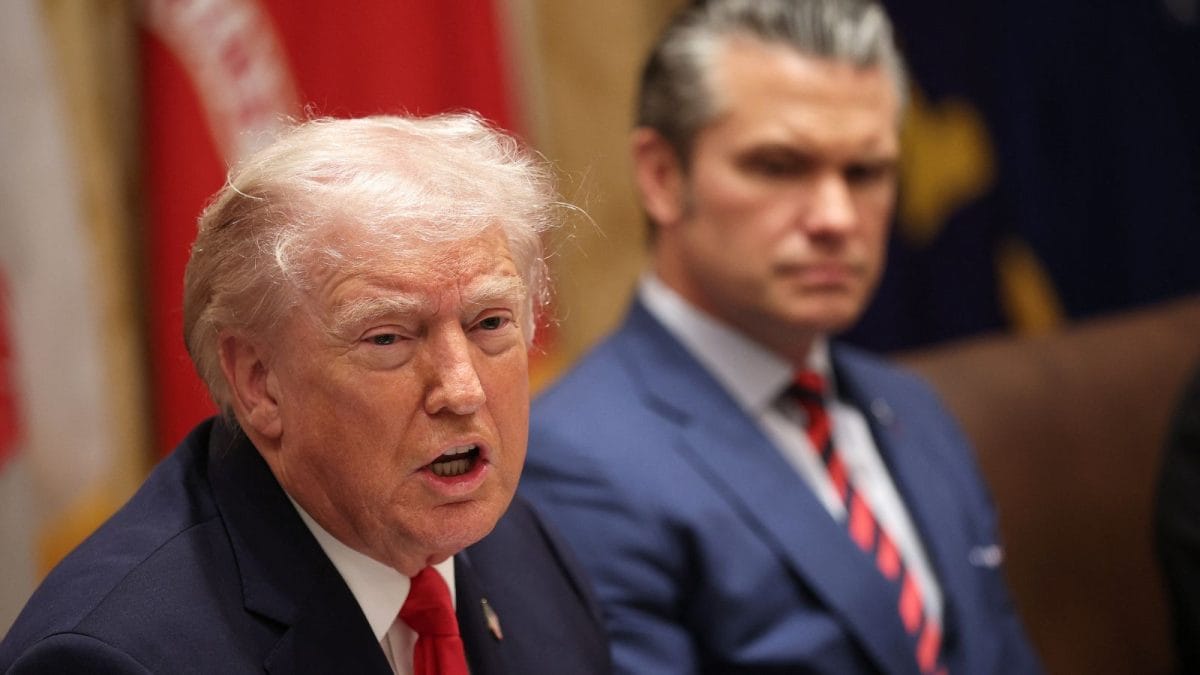
Donald Trump told Axios that the mission to recover a downed F‑15 crew member unfolded under a veil of suspicion that Tehran might have been attempting to draw United States forces into a pre‑planned ambush. The former president emphasized that the operation was launched with the belief that Iran could have been setting a false signal to trap United States troops on the ground.
The scenario, according to Donald Trump, involved a series of intelligence cues that suggested the possibility of a coordinated Iranian effort to create a hostile environment for United States personnel. The notion of a trap was not merely speculative; United States commanders reportedly weighed the risk of entering a region where Iranian Revolutionary Guard forces were known to be actively searching for the ejected officer.
Initial Radio Transmission Sparked Uncertainty
According to Donald Trump, the first cause for alarm originated from a short radio message transmitted by the injured officer after ejecting from the aircraft. The transmission, briefly quoted by Donald Trump, read: “Power be to God.” Donald Trump described the phrasing as unusual, prompting concerns that the officer might already have been captured by Iranian forces or that a deceptive signal was being employed.
A United States defence official later clarified that the exact wording was, in fact, “God is good.” The slight variation in wording introduced a deGree of ambiguity that United States intelligence analysts found noteworthy. Donald Trump highlighted that the unusual nature of the phrase, combined with the hostile environment, fueled the hypothesis that Iran could be using a false‑signal strategy to mislead United States rescue teams.
Subsequent verification from United States officials confirmed that the officer remained alive and that the religious sentiment expressed in the transmission aligned with the officer’s known personal beliefs. The episode underscored how even a brief communication could generate significant strategic considerations for United States planners operating in contested terrain.
Enduring Harsh Mountain Conditions
The injured officer survived for more than twenty‑four hours after the crash, navigating an area characterized by steep slopes, rocky outcrops, and limited cover. Donald Trump recounted that the officer sought shelter in a narrow crevice while Iranian forces conducted a systematic sweep of the surrounding region. The officer’s ability to remain concealed for an extended period was attributed to a combination of personal resilience and the utilization of natural terrain features that offered protection from visual detection.
United States rescue teams employed a suite of technological assets, including signals‑intelligence equipment and location‑beacon devices, to triangulate the officer’s position. The phrase “beeping information” used by Donald Trump referred to the intermittent electronic signals emitted by the officer’s emergency locator transmitter, which United States forces monitored continuously to narrow down the exact coordinates.
Throughout the night, the officer endured exposure to low temperatures, limited visibility, and the constant threat of discovery by Iranian troops. United States medical personnel prepared for the possibility of severe injuries, making rapid medical intervention a priority once the officer was secured.
Two‑Phase Extraction Conducted by United States Special‑Operations Units
The rescue effort unfolded in two distinct stages, each involving a sizable United States special‑operations contingent. Donald Trump reported that approximately two hundred United States special‑operations troops were deployed in total, reflecting the scale and urgency of the mission.
During the first stage, conducted in daylight, a United States rescue element approached the officer’s location while under direct fire from Iranian forces. United States commanders described the maneuver as a “bold and quick snatch,” emphasizing the speed and precision required to extract the injured officer before enemy forces could mount a coordinated response. The daylight operation succeeded in retrieving the officer from the crevice and evacuating him to a United States‑controlled extraction point.
The second stage took place after dark, after United States forces had established a temporary forward operating base inside Iranian territory. United States planners noted that the two crew members from the downed aircraft had landed several miles apart, each in a sector heavily patrolled by Iranian Revolutionary Guard soldiers. United States troops, while maintaining a defensive perimeter around the forward base, executed a coordinated night‑time movement to locate and extract the second crew member, who had remained hidden for an extended period.
Both stages required meticulous synchronization, rapid decision‑making, and the ability of United States personnel to operate effectively under hostile fire. The successful completion of the two‑phase extraction demonstrated the capability of United States special‑operations forces to conduct complex rescue missions in contested environments.
Details of the Aircraft Loss and the Role of Israel
Donald Trump clarified that the F‑15 was brought down by a shoulder‑fired missile, describing the event as a stroke of luck for Iranian forces. The loss of the aircraft added a layer of strategic complexity to the rescue operation, as United States assets needed to account for both personnel recovery and the potential for further escalation.
Israel’s involvement, according to Donald Trump, was limited but appreciated. United States officials confirmed that Israel did not provide the precise location of the injured officer; instead, Israel shared broader intelligence assessments that helped United States planners understand the overall operational picture. In addition, Israeli forces executed a single strike aimed at disrupting Iranian troop movements toward the rescue zone, buying valuable time for United States forces.
Donald Trump characterized the partnership with Israel as one of “big brother and little brother,” indicating a collaborative yet distinct relationship. The limited intelligence contribution from Israel, coupled with the tactical strike, underscored the multifaceted nature of coalition support in high‑risk rescue scenarios.
Strategic Implications and Lessons Learned
The episode highlighted several strategic considerations for United States military planners operating in proximity to Iranian forces. First, the potential for deceptive signals and false‑information tactics demands rigorous verification processes before committing ground troops. Second, the necessity of rapid, technology‑driven location tracking proved essential in locating the injured officer amidst rugged terrain.
Third, the coordination between United States special‑operations units and allied intelligence sources, even when limited, can provide critical edges in time‑sensitive missions. Finally, the successful extraction, despite heavy fire and the presence of hundreds of Iranian Revolutionary Guard soldiers, reinforced the capability of United States forces to conduct high‑risk personnel recoveries under hostile conditions.
Donald Trump’s account of the operation serves as a reminder that rescue missions in contested airspace require not only tactical proficiency but also a keen awareness of adversary intentions, a readiness to adapt to evolving threats, and the ability to leverage allied support when available.