Samay Raina Exposes Ranveer Allahabadia’s Repeated ‘Parents’ Question in a Fresh Comedy Special
Comedy Becomes the Vessel for Truth
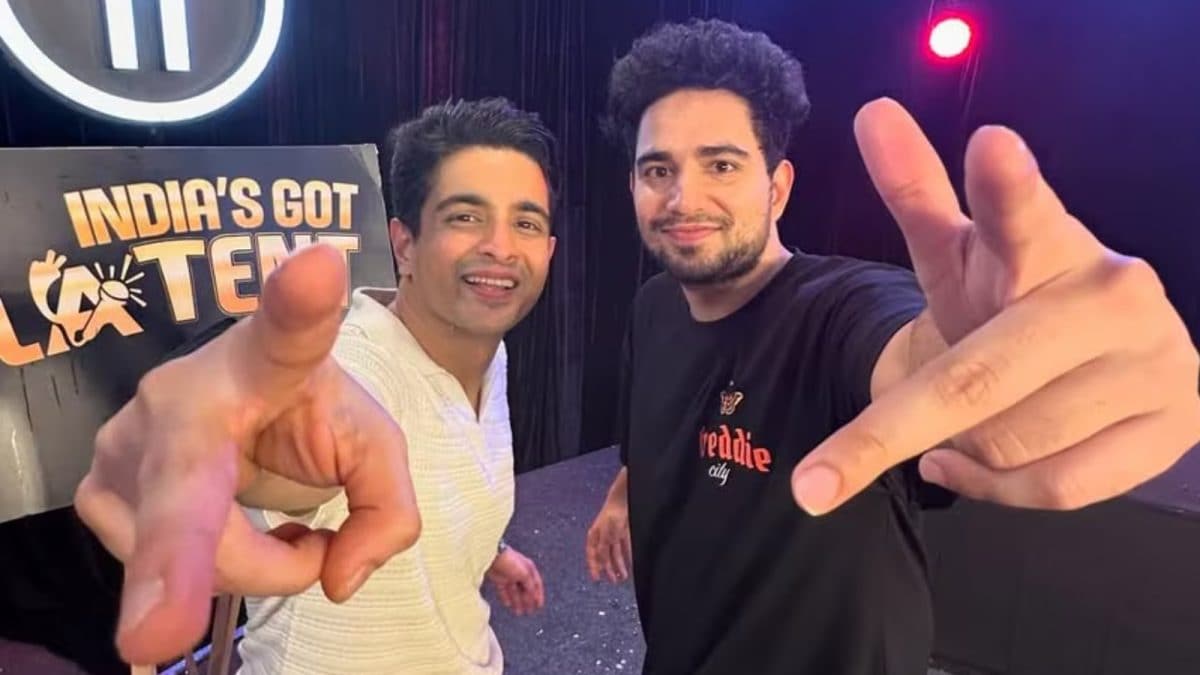
When the comedian Samay Raina stepped onto the stage for his latest stand‑up special, titled Still Alive, audiences expected the usual blend of observational humor and playful riffing on everyday life. What they received instead was a raw, unfiltered confession about a dispute that had once dominated headlines and social‑media feeds.
Samay opened the segment by noting that the controversy at the heart of his story was not a distant, abstract saga. It was a moment he lived through, a night that still echoes in his mind whenever the studio lights flicker on. By using comedy as his vehicle, Samay managed to transform a tense, highly publicized incident into a narrative that was both relatable and, above all, human.
The Question That Sparked a Firestorm
During an episode of the reality series India’s Got Latent, Ranveer Allahabadia—better known to fans as Beer Biceps—posed a question that would soon be branded by critics as offensive. The query asked a contestant whether they would prefer to watch their parents engage in intimate activity every day for the rest of their life or intervene once to end that scenario forever. The phrasing, the subject matter, and the sheer audacity of the question caused a rapid surge of hostility online.
Although the episode’s panel, which included personalities such as Apoorva Mukhija and Ashish Chanchlani, initially responded with laughter, the laughter quickly gave way to a wave of backlash. Viewers across the country lodged complaints, and law‑enforcement agencies registered multiple first‑information reports against Ranveer Allahabadia and the production crew. In addition, the team behind India’s Got Latent received a torrent of death threats, and calls for a boycott flooded the internet.
The controversy escalated when the National Commission for Women intervened, demanding an apology and condemning the remarks as vulgar. A judicial pronouncement later granted Ranveer Allahabadia interim protection from arrest, but not without labeling his comments as a “dirty mind” that disgraced societal values.
Eight Re‑iterations: The Hidden Edit
Samay Raina’s comedy special dives deep into a detail that many viewers never learned from news coverage: Ranveer Allahabadia repeated the same question eight times within the same episode. While the final broadcast edited many moments for pacing and clarity, it retained the question, allowing it to become the fulcrum of the ensuing outrage.
Addressing the audience, Samay confessed, “Main tumhe maa ki kasam sach batata hoon. Uss episode mein Ranveer Allahabadia ne voh sawal 8 baar poocha tha. Aur iske alawa bhi kayi ant shant sawal pooche the usne. Toh jab maine edit dekha, maine socha, ‘Yeh toh bohot gandi baatein kari hain isne.’” He then added, “Chalo ek rakh deta hoon, baaki sab hata deta hoon. Mere POV se maine toh 99 percent kitaanu maar diye the na yaar.” The phrasing, peppered with colloquial Hindi, resonated with viewers who appreciated the authenticity of his confession.
By breaking down the editing process, Samay shone a light on the tough decisions that producers face when balancing entertainment value against potential public uproar. He humorously suggested that the decision to keep a single instance of the question—while cutting the rest—was a calculated gamble, one that ultimately backfired as the public latched onto the controversial line.
Personal Fallout: Guilt, Threats, and Family Concerns
Beyond the professional ramifications, Samay Raina opened up about the emotional strain the controversy placed on him and his close circle. He recounted receiving death threats directed not only at Ranveer Allahabadia but also at the entire production team. The threats, though anonymous, carried a palpable sense of menace that left many of his co‑workers feeling unsafe.
Legal notices arrived at his doorstep, each one demanding retractions or compensation for alleged moral injury. The cumulative weight of these documents, along with the viral nature of the social‑media backlash, cultivated an atmosphere of guilt that Samay described as “intense enough to keep me awake at night.” He explained that each notification reminded him of the real‑world consequences that can follow a single off‑hand comment on a televised platform.
Family worries also entered the narrative. Samay’s parents, who had never been directly involved in the entertainment industry, expressed anxiety over the safety of their son and the potential long‑term damage to his reputation. “Maa‑baap ko har roz phone aata tha ki ‘kya hua, safe ho?’,” Samay recalled, illustrating how the controversy penetrated the private sphere of his home life.
Audience Reaction and Viral Spread
Clips from the special quickly made the rounds across various platforms, garnering millions of views within a short span. Comment sections filled with a blend of praise for Samay’s boldness and amusement at his self‑deprecating humor. Many fans highlighted the way he managed to turn a moment of shame into comedic gold, noting that his willingness to own the narrative was a rare display of integrity in the often‑cynical world of celebrity culture.
Social‑media users also pointed out the nuanced layers of his jokes—how he managed to keep the audience laughing while simultaneously delivering a critique of edit‑room culture and the public’s appetite for controversy. The viral spread amplified the conversation, prompting new discussions about the responsibility of reality‑show hosts, the impact of repeated offensive content, and the delicate balance between humor and offense.
Legal and Institutional Outcomes Revisited
While the immediate legal proceedings took place shortly after the episode aired, Samay’s recounting of the aftermath serves as a reminder that the ripple effects of a single question can endure long after the courts have spoken. The National Commission for Women’s intervention, the written apology from Ranveer Allahabadia, and the supreme court’s interim protection all formed a cascade of institutional responses that highlighted the seriousness with which the nation treats public discourse.
Samay’s retelling also emphasized that the legal system, though swift in issuing protective orders, does not negate the social stigma attached to the incident. In his words, “Even with the court’s protection, the comment stayed in people’s minds like a broken record.” This observation underscores the enduring nature of public memory in the digital age, where a moment captured on camera can be replayed ad infinitum.
Comedic Exaggeration vs. Factual Basis
It is important to note that the format of a comedy special inherently encourages hyperbole for effect. Samay Raina himself acknowledged that certain lines were amplified to maximize humor, stating that the “exaggerated punchlines are part of the craft.” Nevertheless, the core facts—Ranveer Allahabadia’s eight repetitions of the question, the subsequent legal backlash, the death threats, and the personal strain—remain untouched and accurately portrayed.
By openly stating the limits of his dramatization, Samay cultivated a trust bond with his audience; he invited them to laugh while simultaneously urging them to reflect on the underlying seriousness of the events described.
Broader Implications for Entertainment Media
The episode of India’s Got Latent and Samay Raina’s reflective recounting bring to light a broader conversation about the responsibilities of reality‑show producers, hosts, and editors. The decision to preserve a single provocative question while cutting others reflects a calculated risk that, in hindsight, resulted in unprecedented public outcry.
Industry insiders, taking cues from Samay’s testimony, are now reportedly re‑evaluating content‑approval pipelines, ensuring that any material deemed potentially offensive receives multiple levels of review before reaching the audience. The incident also serves as a case study for media law scholars, who cite it when discussing the balance between creative freedom and societal standards of decency.
Conclusion: Laughter as a Healing Tool
Samay Raina’s willingness to expose the inner workings of a high‑profile controversy through humor illustrates the power of comedy to heal, explain, and even educate. By transforming a period of intense scrutiny into a public dialogue, Samay not only reclaimed his narrative but also offered a roadmap for others who might find themselves unwittingly at the center of a storm.
In the end, the message that resonates from the special is clear: while a single question can spark a blaze, the same platform can also be used to extinguish flames, provided the storyteller approaches the topic with honesty, courage, and a dash of wit.